How Strong Teams Learn to Solve Issues Together
A Brain-Based Look at Courage, Focus, and Forward Motion
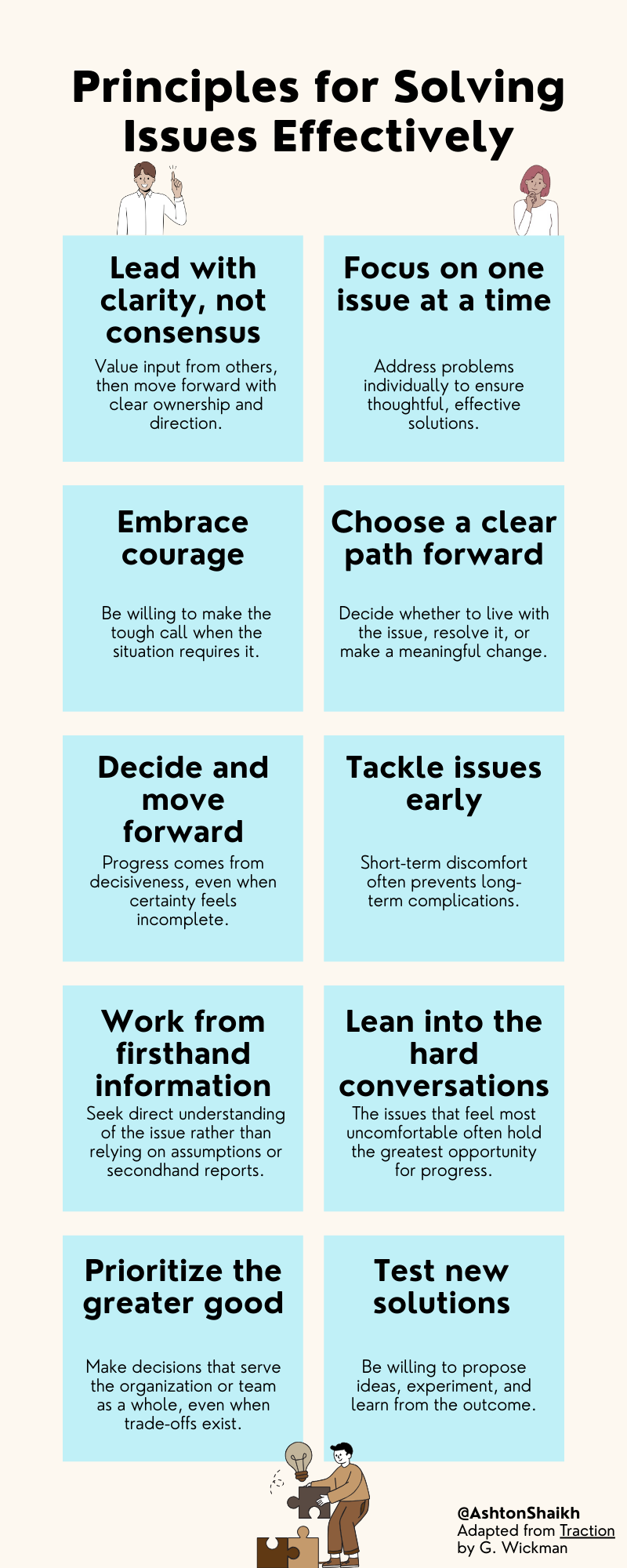
Teams rarely struggle because problems remain unseen; awareness typically arrives early and with surprising precision. Signals surface in missed handoffs, recurring agenda items, and conversations that circle without landing, creating a sense of motion without momentum. Progress slows despite sustained effort, while energy drains without an obvious or immediate explanation.
Scenes like this unfold across organizations of every size and sector, regardless of experience or expertise. Talent runs deep and commitment remains strong. Forward motion, however, begins to feel heavy and effortful. The underlying cause rarely lives in motivation or intelligence alone. Cognitive and behavioral science instead points toward quieter, more structural dynamics shaping how people think, decide, and act together.
Human brains manage uncertainty, social risk, and complexity with limited cognitive bandwidth. Without shared habits that support attention, emotional regulation, and sound decision-making, even highly capable teams stall under pressure. Issue-solving becomes inconsistent, exhausting, and fragile, particularly in environments where stakes feel high and clarity feels elusive.
Strong teams approach issue-solving as a learnable, repeatable practice rather than an individual trait or leadership style. The ten principles that follow describe habits designed to align with how people actually think and work under real conditions, supporting steadier progress, healthier dialogue, and sustained forward motion.
These principles are informed by the issue-solving framework outlined by Gino Wickman in Traction, viewed here through a cognitive and behavioral science lens.
1. Lead with clarity, not consensus
How many meetings end with thoughtful discussion, shared understanding, and a collective sense of progress, yet still close without a clear decision?
What: This principle centers visible ownership within group decision-making. Diverse input remains essential, yet ownership provides the structure that allows ideas to move from exploration into action. Direction creates momentum and signals closure.
Why: Group discussion without clear decision ownership increases cognitive load and heightens social evaluation pressure. Under these conditions, working memory shifts toward managing impressions, navigating dynamics, and tracking unspoken expectations rather than resolving the issue at hand (Sweller et al., 2019). Mental energy becomes fragmented, leaving teams mentally busy but operationally stalled.
How: Invite perspectives early and signal respect for expertise across the room. Clearly name who holds responsibility for deciding, along with the criteria guiding that decision. Ownership frees attention to shift from weighing options to executing plans.
Quick Tip: Close meetings by stating the decision owner, the decision made, and the immediate next step.
2. Focus on one issue at a time
A whiteboard fills corner to corner with problems. Markers squeak as ideas are added faster than they can be processed. Notes blur together. People shift in their chairs, scanning the list, unsure where to begin. Attention thins as the sheer volume of issues overwhelms the room.
What: This principle limits cognitive demand by intentionally narrowing focus to a single issue at a time. Concentrated attention creates the conditions needed for meaningful progress.
Why: Working memory supports only a limited amount of information at once. Divided attention weakens problem-solving accuracy and emotional regulation, particularly in group settings where social cues and time pressure already compete for mental resources (Cowan, 2016). Multiple unresolved issues draw from the same cognitive pool, leading to fatigue, frustration, and shallow resolution.
How: Select one issue and give it full attention. Resolve it, assign clear ownership, or intentionally park it with a plan to return. Signaling closure restores mental capacity.
Quick Tip: Use a visible parking lot to capture ideas without sacrificing focus.
3. Embrace courage
A performance concern appears on three agendas without direct conversation. Each mention feels lighter than the last, softened by careful language and quick transitions. Everyone notices, but no one addresses it directly.
What
This principle supports engaging discomfort rather than avoiding it. Courage in this context does not mean confrontation. Courage means staying present with challenging topics long enough for clarity and growth to emerge.
Why
The brain prioritizes short-term emotional regulation under perceived social threat. Avoidance offers immediate relief while quietly reinforcing long-term tension and uncertainty (Krypotos et al., 2015). Repeated, supported engagement reduces emotional reactivity over time, strengthening the neural pathways that support confidence and regulation.
How
Normalize discomfort as a natural part of learning and performance conversations. Establish shared language for feedback and use clear structures to reduce emotional ambiguity during difficult discussions.
Quick Tip
State the concern plainly, then pause. Silence often creates space for honesty and reflection.
4. Choose a clear path forward
Unresolved issues drain more energy than difficult decisions ever will.
What
This principle centers on choice. Teams benefit from explicitly deciding whether to live with an issue, resolve it, or change course altogether. Any of these paths can be productive once named and owned.
Why
Unfinished goals create ongoing cognitive tension that quietly pulls attention away from present work. Research shows that unresolved issues continue to occupy mental resources across contexts, increasing fatigue and reducing focus even outside the original situation (Betrams, 2020). Clear direction releases mental energy that uncertainty keeps locked in place.
How
Name the chosen path forward explicitly and without hesitation. Direction provides psychological closure, reduces emotional fatigue, and allows teams to redirect attention toward execution rather than rumination.
Quick Tip
Ask one simple question aloud: Are we living with this, fixing this, or changing approach?
5. Decide and move forward
A project stalls mid-quarter while teams wait for perfect information. Timelines stretch. Dependencies pause. Conversations loop back to the same unanswered questions as momentum slowly fades.
What
This principle values movement supported by reflection rather than prolonged hesitation. Progress depends less on certainty and more on the willingness to act, learn, and adjust.
Why
Decision commitment reduces stress responses associated with uncertainty, even under incomplete information (Leotti et al., 2015). The brain experiences relief once a path is chosen, allowing attention and working memory to reengage with the task itself. Learning frequently follows action rather than preceding it, especially in complex or evolving situations.
How
Choose a direction with the information available. Act deliberately. Observe outcomes. Adjust based on evidence rather than assumption.
Quick Tip
Schedule a review checkpoint to reinforce adaptability and remind teams that decisions remain open to refinement.
6. Tackle issues early
Small issues rarely stay small without attention. What first appears as a minor misalignment or fleeting concern often grows quietly beneath the surface.
What
This principle prioritizes early intervention as a way to support both performance and relationships. Addressing issues early keeps them proportional and manageable.
Why
Early stress paired with agency supports adaptive coping and long-term stability (McEwen & Morrison, 2019). The brain responds more flexibly to challenges that feel actionable. Delayed action, by contrast, compounds cognitive and emotional load, allowing uncertainty and tension to expand over time.
How
Address concerns as soon as patterns begin to emerge, while stakes remain manageable and options remain flexible. Early action preserves trust, protects cognitive capacity, and reduces the likelihood of escalation.
Quick Tip
Treat early discomfort as a signal of care rather than urgency. Pausing to address a small issue now often prevents a far more disruptive intervention later.
7. Work from firsthand information
A concern escalates after passing through four retellings. Each version carries slightly different emphasis, emotion, and interpretation, until the original issue feels larger and more charged than it began.
What
This principle emphasizes direct understanding as the foundation for effective issue-solving. Firsthand information anchors decisions in reality rather than assumption.
Why
Memory distortion increases with retelling, particularly under emotional arousal (Schacter, 2018). As stories move through multiple voices, details shift, intent blurs, and assumptions quietly replace facts. The brain fills gaps with inference, increasing the risk of misalignment and unnecessary escalation.
How
Seek original sources whenever possible. Observe processes directly. Review primary data. Engage in conversations with those who experienced the issue firsthand before drawing conclusions or proposing solutions.
Quick Tip
Ask a simple clarifying question before acting: Who experienced this directly, and what did they observe?
8. Lean into the hard conversations
Which conversation feels hardest to start right now? The answer often points directly to the work that matters most.
What
This principle encourages engagement where tension lives rather than circling around it. Hard conversations create opportunities for clarity, trust, and meaningful progress.
Why
Perceived social threat activates neural pain circuits, drawing attention away from reasoning and regulation. Psychological safety helps preserve working memory and cognitive flexibility during challenges, allowing people to stay engaged rather than defensive (Shackman et al., 2016). Structure reduces threat by making expectations visible and shared.
How
Create clear structure around difficult conversations. Frame dialogue around shared goals, roles, and outcomes rather than personal fault. Purposeful framing signals safety and supports collaboration even in moments of disagreement.
Quick Tip
Open with purpose before content. Naming why the conversation matters often reduces defensiveness and supports more productive dialogue.
9. Prioritize the greater good
One department celebrates a win while the system strains quietly in the background. Metrics improve in one area as pressure builds elsewhere, unnoticed until consequences surface.
What
This principle centers decisions on collective outcomes rather than localized success. Strong teams consider how choices affect the broader system, not just a single group or metric.
Why
Identity and affiliation shape judgment in powerful ways. People naturally favor decisions that benefit their immediate group. Systems thinking helps counter this bias by widening perspective and supporting long-term performance and trust across the organization (Amodio, 2019).
How
Evaluate ripple effects across teams, roles, and processes before finalizing decisions. Consider who benefits, who absorbs cost, and how those effects interact over time. Shared awareness strengthens alignment and reduces unintended consequences.
Quick Tip
Ask a grounding question before deciding: Which option best serves the organization as a whole?
10. Test new solutions
Progress favors experimentation over perfection. Movement creates insight that planning alone rarely provides.
What
This principle values testing ideas through action rather than waiting for certainty. Experimentation allows teams to learn in real time and adapt based on evidence rather than assumption.
Why
Exploration activates dopaminergic motivation systems that support learning, curiosity, and persistence (Bromberg-Martin & Monosov, 2020). Small tests reduce perceived risk while increasing engagement, helping teams stay energized and open to refinement. The brain responds positively to progress and feedback, even when outcomes require adjustment.
How
Pilot ideas on a manageable scale. Observe results closely. Refine approaches based on what emerges rather than committing prematurely to untested solutions. Reflection strengthens learning and improves future decision-making.
Quick Tip
Frame experiments as learning opportunities rather than final answers. Clear framing reduces fear of failure and encourages thoughtful iteration.
Key Takeaways
Issue-solving works best as a shared, learnable practice rather than an individual personality trait.
Team performance reflects cognitive load, emotional regulation, and psychological safety as much as skill or experience.
Clear ownership and focused attention support stronger decision-making and follow-through.
Courage develops through supported engagement with challenging conversations.
Clear direction reduces mental fatigue and restores momentum.
Action creates the conditions for learning and improvement.
Early attention prevents small issues from escalating into larger disruptions.
Firsthand information protects accuracy and reduces unnecessary tension.
Thoughtful experimentation sustains energy, curiosity, and progress.
Final Reflection
Strong teams solve issues most effectively through shared habits aligned with how brains think, feel, and decide under real-world conditions. Attention becomes more intentional and courage grows steadier. Forward motion feels sustainable rather than forced.
Meeting rooms begin to feel different as these habits take root. Decisions settle with greater confidence as conversations deepen and carry more meaning. Energy returns to the work itself instead of being spent on uncertainty or avoidance.
Strength develops quietly, built through practice, trust, and consistent care for how people work together.
Note: The ten issue-solving principles referenced in this piece are adapted from Gino Wickman’s Traction and expanded through contemporary cognitive and behavioral science research.